Adaptive Card
Situation:
What:
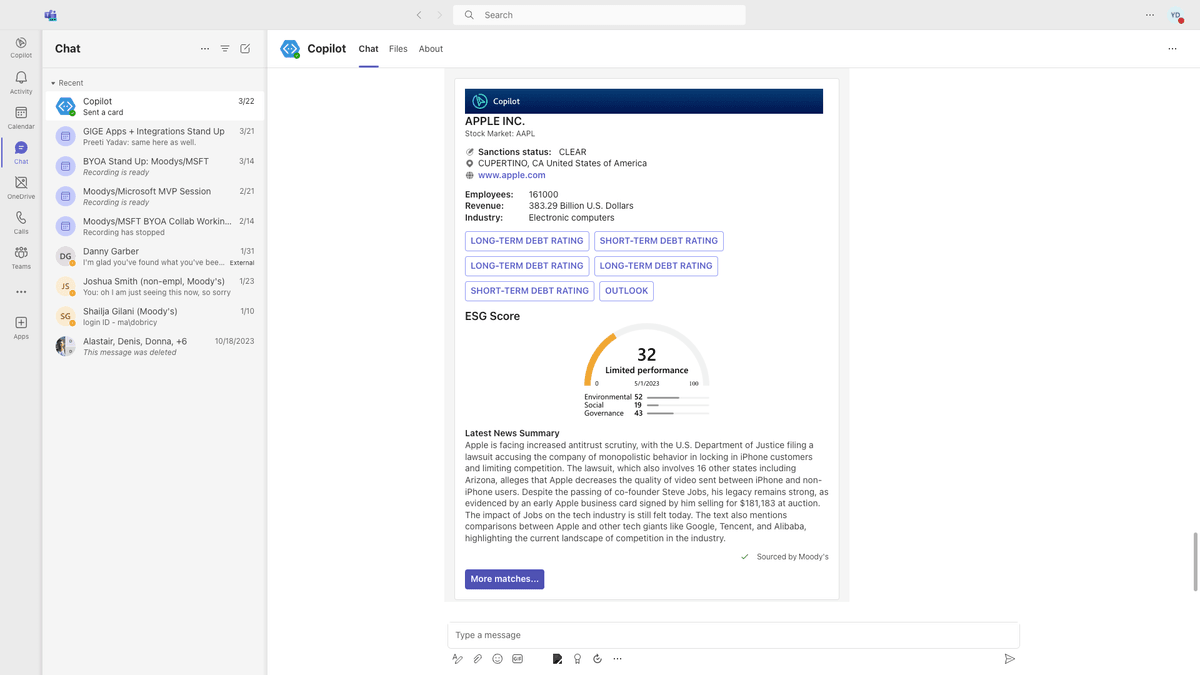
Adaptive Card was one of the products we produced in Moody’s much-publicised partnership with Microsoft, formed in March 2023. Target audience were Microsoft clients who use Microsoft Teams. In this partnership, Microsoft provided technology, and reach (access to their sizable client base). And Moody’s provided our unprecedented data. Moody’s is a 115-year old company, who has been collecting data about companies for over a century. We have data that no other company has. The tagline for the partnership was:
“Powered by Microsoft, anchored by Moody’s”
Task:
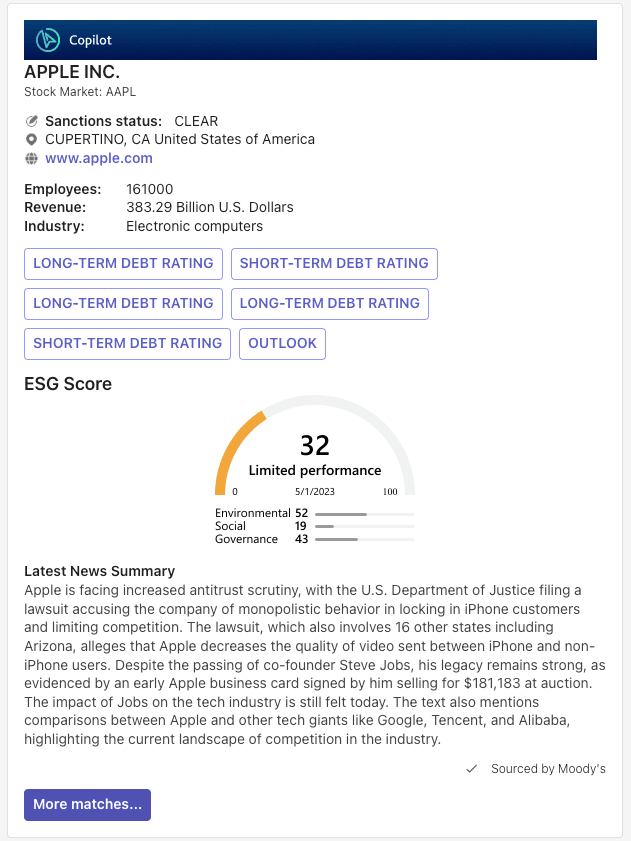
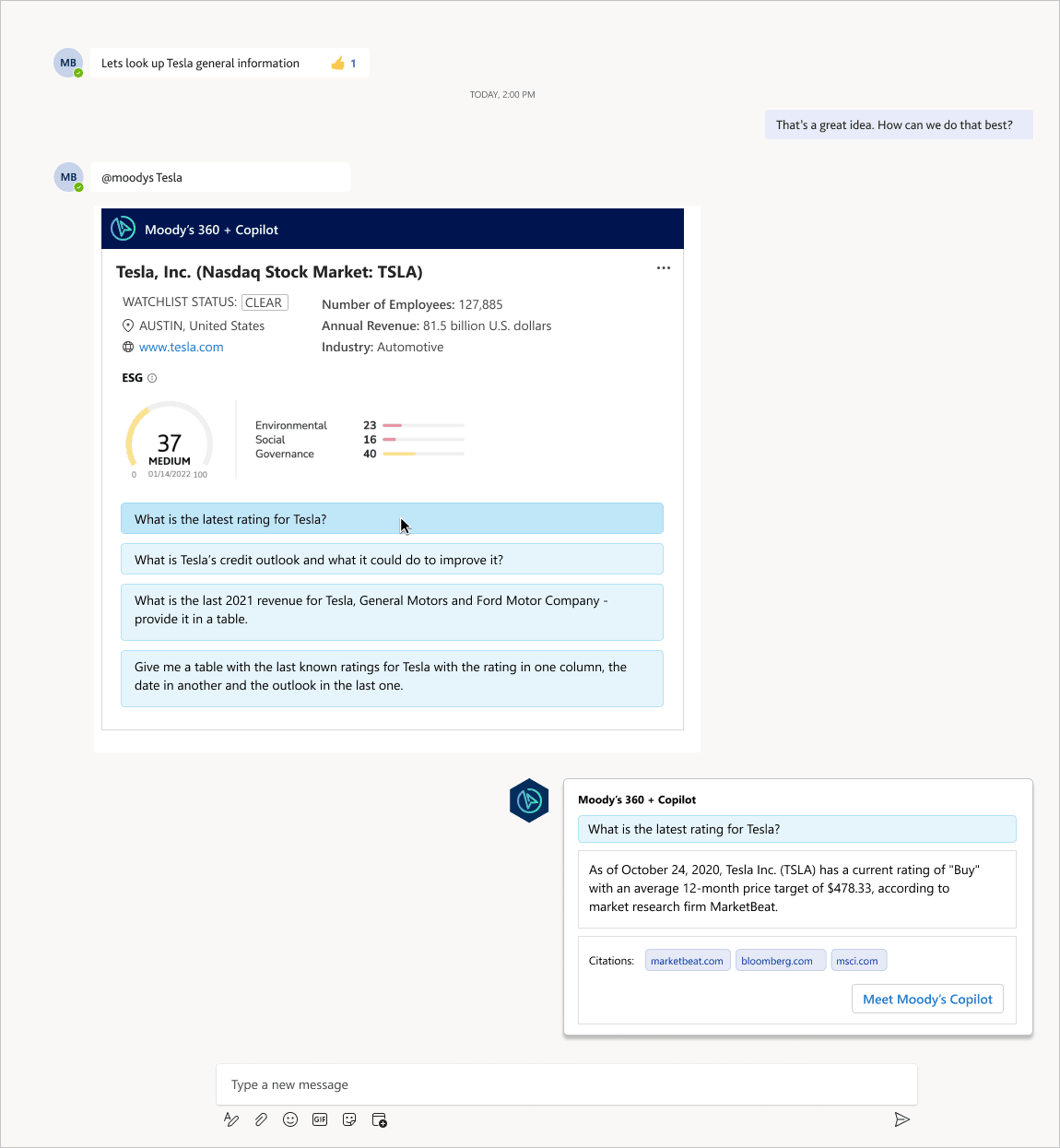
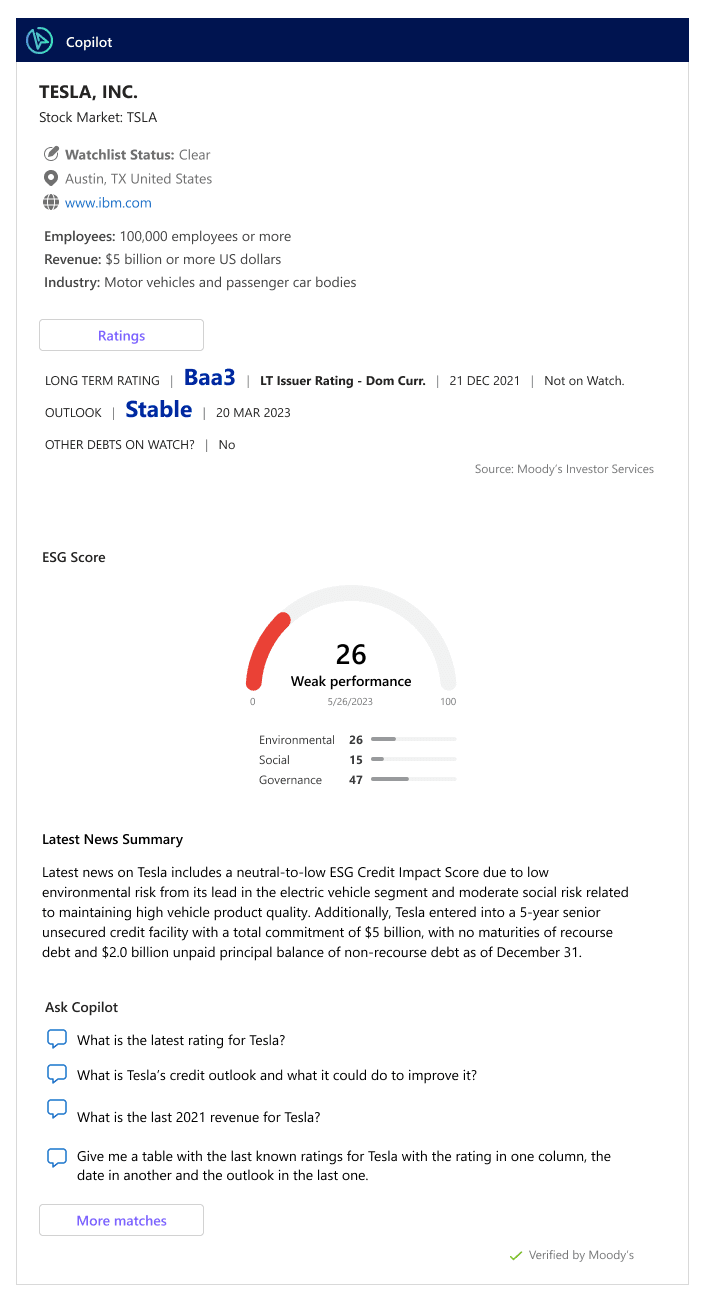
Adaptive Card can be invoked while a user chats in Teams. It can be in a conversation with Moody's Copilot. Or, user can be in a conversation with another person, and invoke Moody's Copilot as a third participant in that chat. User invokes Moody's Copilot and the company name. Like this: "@Copilot about Tesla" and they receive the Adaptive Card that contains the following information about Tesla:
● Firmographic data such as:
- Watchlist status (showing any transgressions, sanctions, security alerts by the US Government, etc)
- Headquarters location
- Number of employees
- Annual revenue
- Industry classification
- Website URL
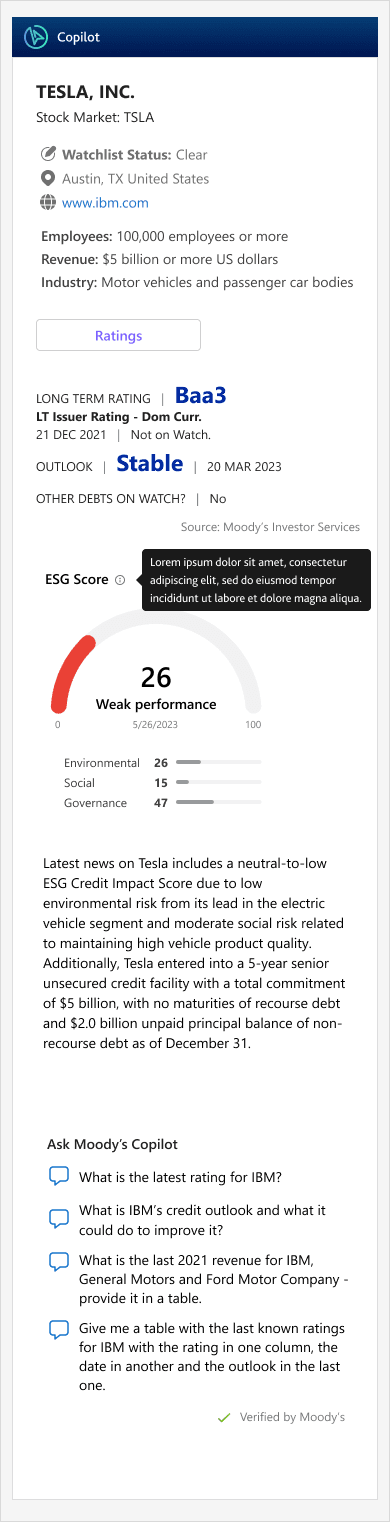
● Moody's Rating for rated companies: long-term, short-term, and outlook
● Moody's ESG score and breakdown of that score: Environmental, Social and Governance individual scores
● Latest news summary from Moody's Copilot
● Follow-up questions from Moody's Copilot (suggested questions, frequently asked about the company)
What's unique about Adaptive Card:
This project required us to work within the Microsoft's Fluent Design System the system is not optimized for so many varieties of content that we had. So there was a lot of testing, trial, adaptation, and so on. Also, we had to marry the Moody's Copilot brand with Microsoft. So there was some balancing there. My visual designer and I worked very closely together, and then partnering with Microsoft Front and Back End Engineers, to figure all this out.
Why:
● To enable users to prepare for their meetings: To save users' time from having to look up all this information on their own.
● To showcase Moody's products: The breadth and depth of Moody's data. It is optional and free to use, for these select Microsoft clients.
● To attain new clients: Moody's Copilot initial Teams' integration was a teaser, where Moody’s gave a peek into the breadth and depth of our data. Users can then express interest in obtaining a fuller access to Moody’s data, and establishing a relationship with Moody’s.
● To showcase Microsoft capabilities: Moody's Copilot, as the Adaptive Card, in Microsoft Teams. Microsoft Inspire conference. May 2023.
Team:
Microsoft + Moody's:
Moody's team:
● 2 Front End Developers
● Moody's Product Manager
● Moody's senior stakeholder who is also Head of Engineering
● Myself as a UX Lead
● Visual designer from my team
● Head of User Research
Microsoft team:
Mostly developers.
● 1 Front End
● 1 Back End
● Team lead who was mostly in a Product Management + Engineering Lead and oversight role.
● There were some additional MSFT resources throughout the project.
Action:
Timeline:
● April 2023 – Started work.
● June 2023 – Launched Adaptive Card in Teams, to be demoed at conferences and events.
● July 2023 – Continued to test internally, the whole team, Moody's + Microsoft. We all acted as QA.
● August 2023 – Implemented improvements and enhancements from QA.
● October 2023 – Implemented with internal Moody’s Procurement, Sales, and Credit Analysts, and externally to "friendly" Microsoft clients.
Who was it for:
Adaptive Card targeted particularly individuals who have to research and meet with a lot of companies in their daily jobs.
● Procurement Personnel
● Sales
● Credit Analysts
● CounterParty Credit Researchers
● But also included investment research analysts, credit and risk analysts, and anyone looking up information on any company.
Where:
In Microsoft Teams, exposed to select subset of Microsoft users.
My role:
● Information architecture and logic
● Interaction Design
● Adaptive Card required very close collaboration between my teammate, the Visual Designer, and me.
Results:
Impact:
Feedback from Sales team, who used the Adaptive Card the most:
WHAT'S GREAT:
● Increased efficiency: Adaptive Card helped users reduce the number of platforms they access to get the information they need, helping them stay organized, keep them informed and reducing their daily task load. The information is clear and digestible.
● Favorable UX: Adaptive Card users found the overall design and information organization to be clear, appealing and easy to understand.
REQUESTED FEATURES:
● Users wanted customization. The Adaptive Card has high value to Sales team members, especially the sample "Ask" questions. However, they would like the data to be customized to their roles. They asked for:
- Full firmographic data, including full contact information and addresses.
- Financial information: Annual revenue and total assets. AUM (Assets under management) and loan volume.
- Information on leadership. Names and LinkedIn profile links.
- Company directory.
- Mergers and acquisitions information.
- Information about any Moody's Analytics products and services that the company may be subscribed to.
- None turned out to use ESG scores (Environmental Social Governance).
- Some would be interested in Credit and Compliance Risk scores.
● Configurability and saving work. Users asked for ability to:
- Configure the types of data and news pulled into the Adaptive Card.
- Save individual company cards into their MS Teams Tasks and Notes.
- Set news alerts as part of their Teams Calendar.
- Have the news sent to their email.
- Share the above information with colleagues.
GENERAL NEED USERS SHARED:
● Collaboration throughout the process. Sales team roles and workflows are highly collaborative and interdependent. They asked for these tools to help them share tasks and information throughout the Sales pipeline:
- During initial research.
- When strategizing and preparing for meetings.
- In meetings when they are pitching.
- Sharing notes with colleagues.
- Preparing deal paperwork and contracts.
Lesson learned: in a partnership, individuals/team/organizations need to be patient, open to dialog and ready for some compromise. The partnership exists because both parties decided that it will be beneficial to them. As Aristotle said "The whole is greater than the sum of its parts".
And this is how the Adaptive Card came to life:
Early design
Figuring out limitations and workarounds, around Microsoft's Fluent Design System.
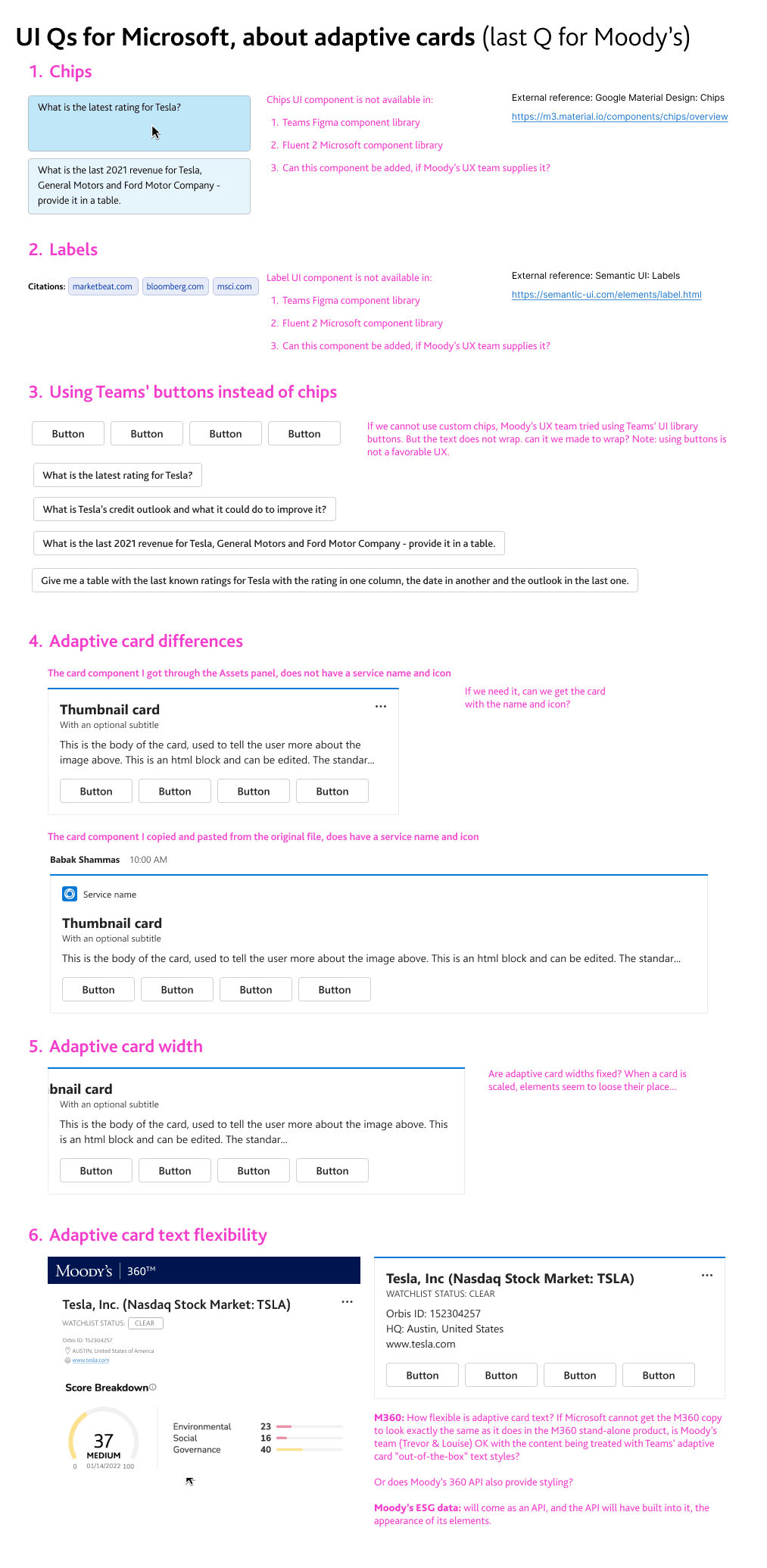
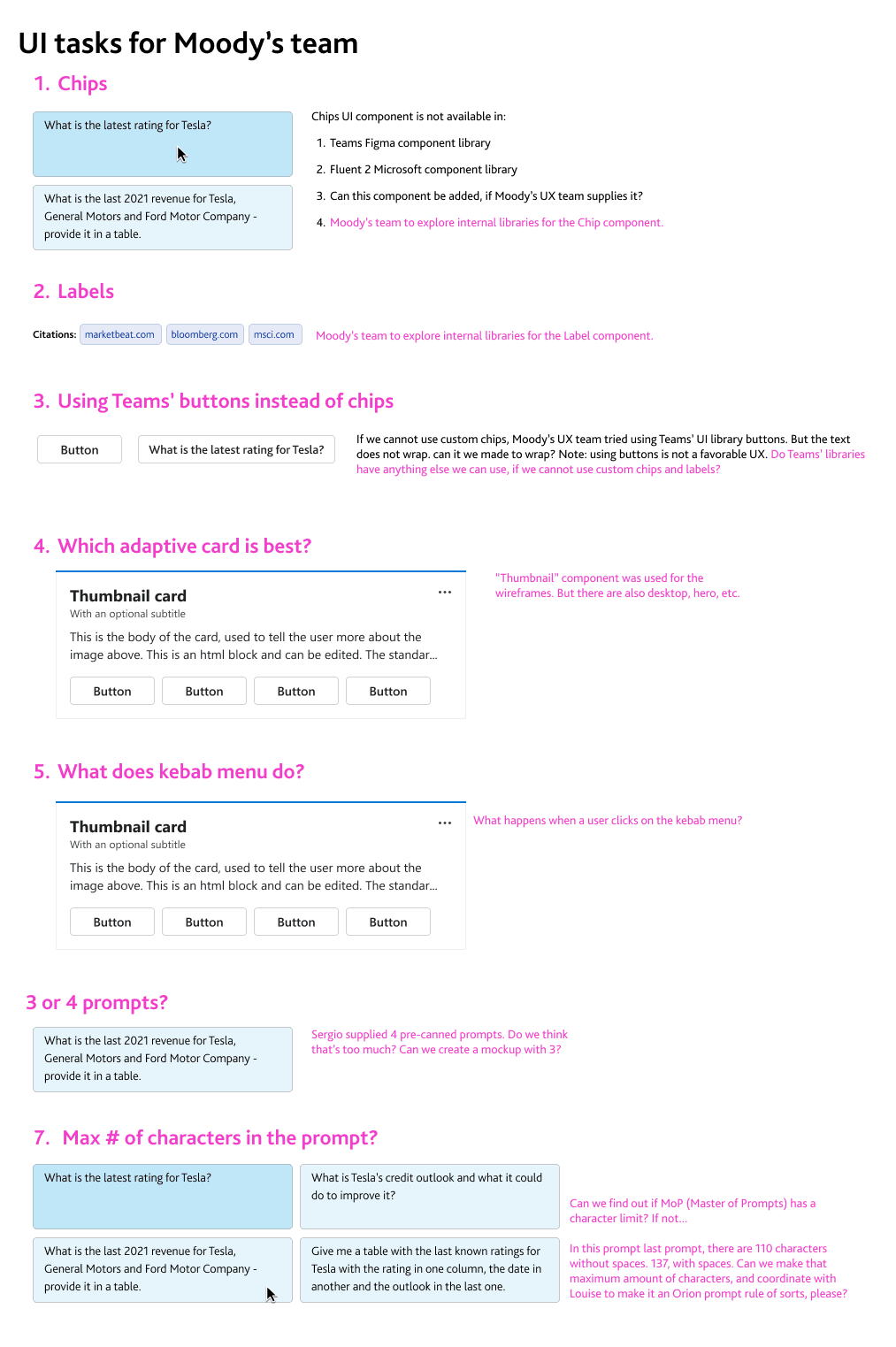
Adapting the design to Microsoft's Fluent Design System requirements:
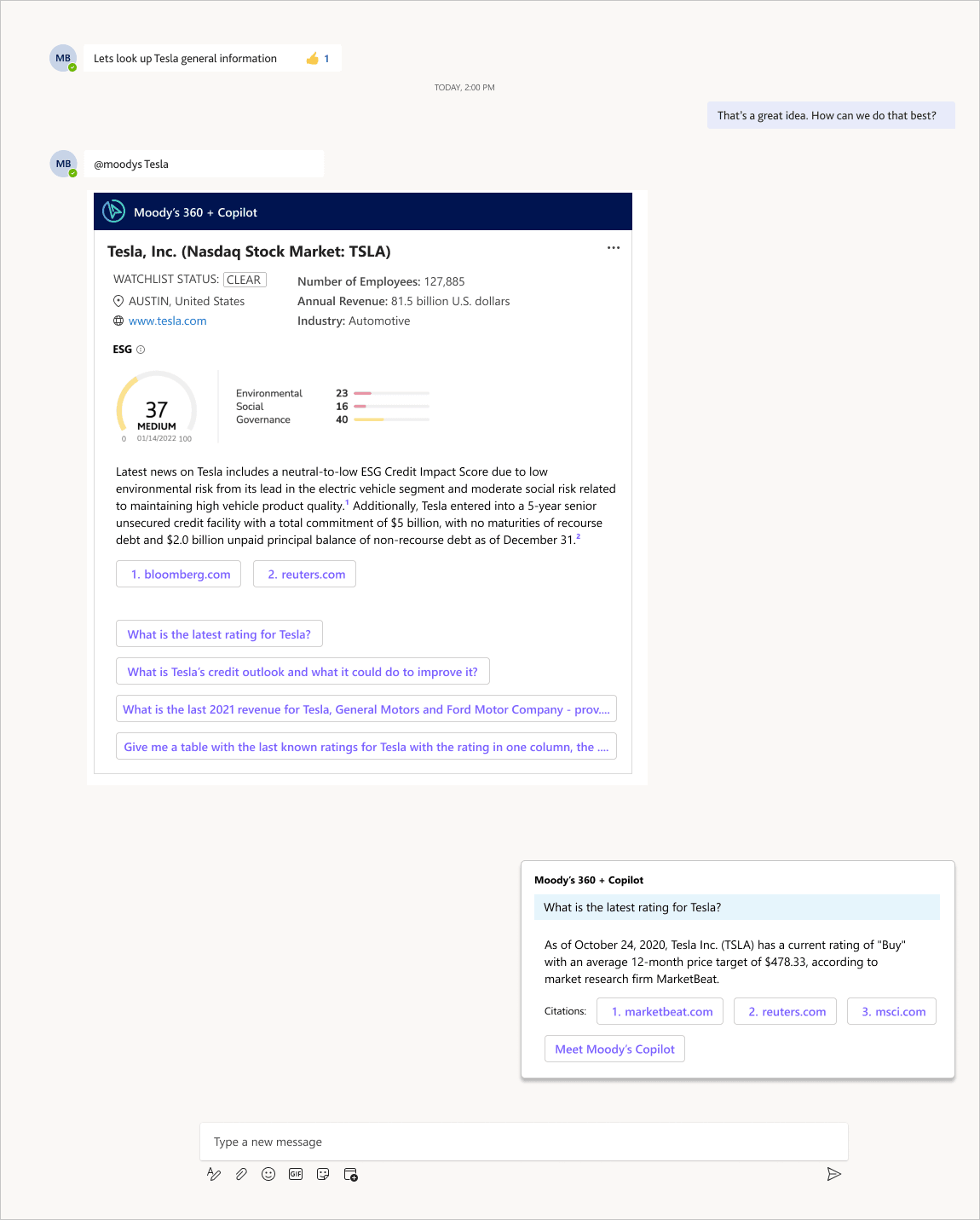
Adding Copilot News:
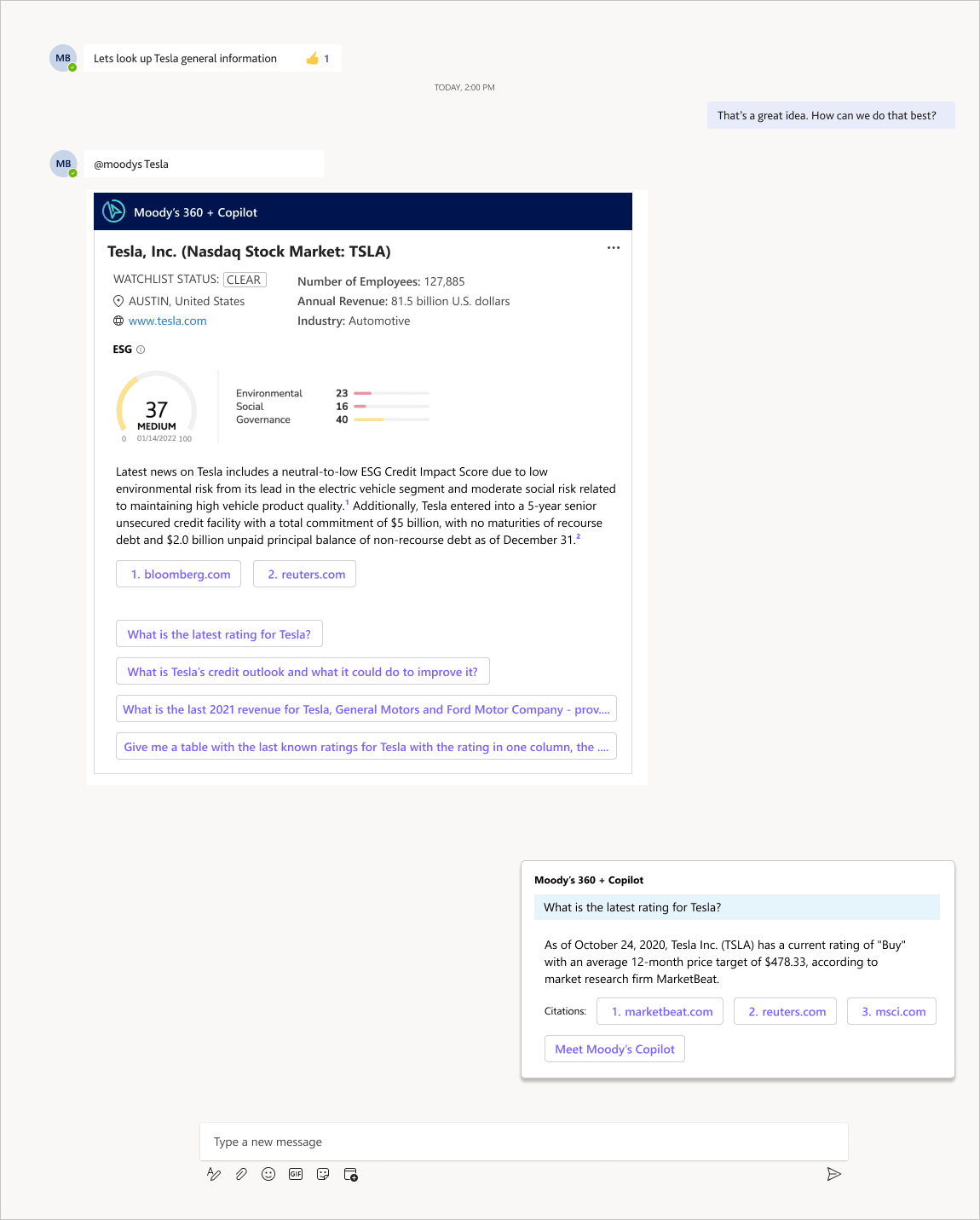
Exploring optimal word limit on responses:
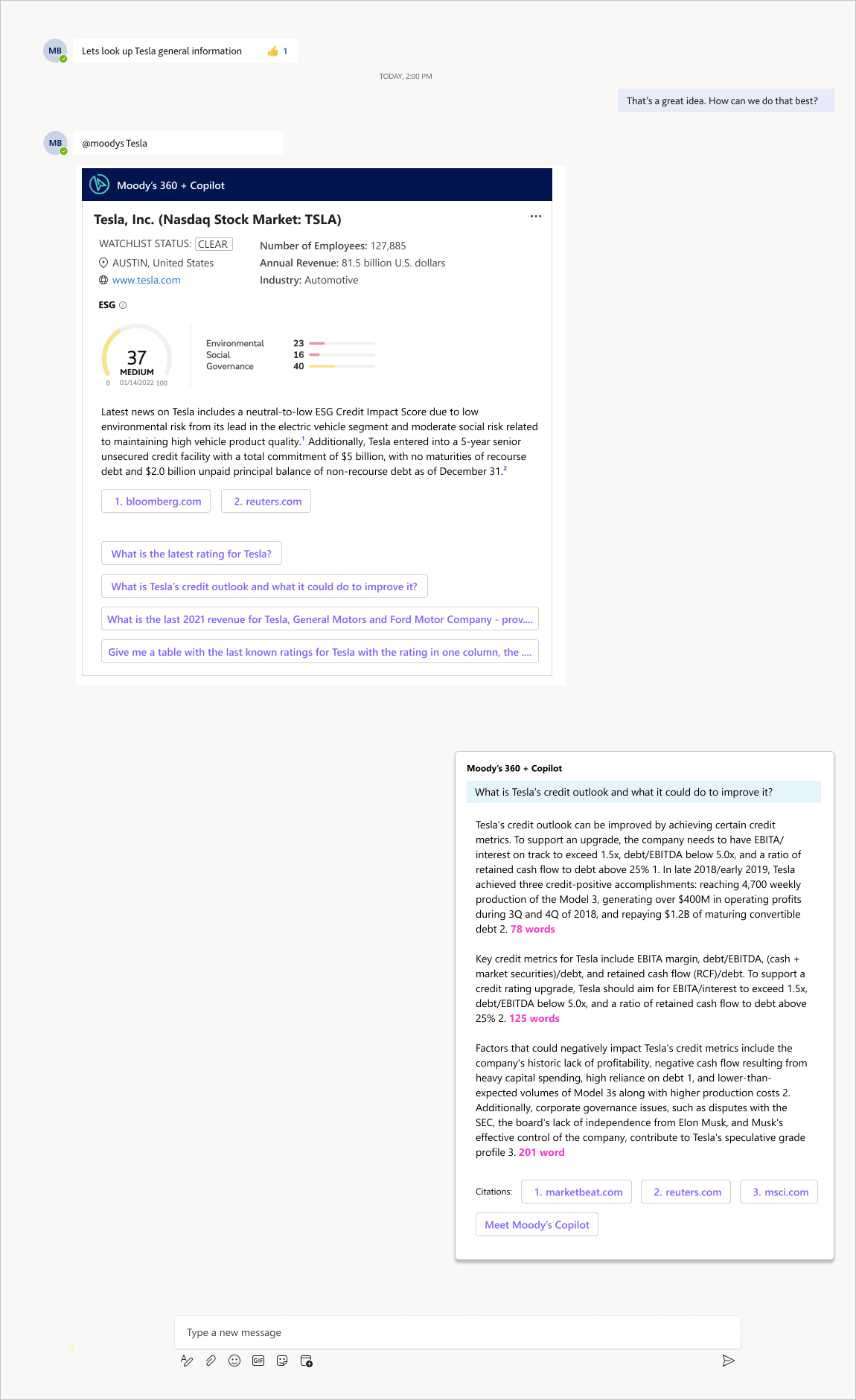
Adding Ratings - Moody's flagship product. This is a desktop version:
Ratings - Moody's flagship product, mobile version:
Final implementation in Production: the prompt, textual response, followed by the Adaptive Card (next screen):
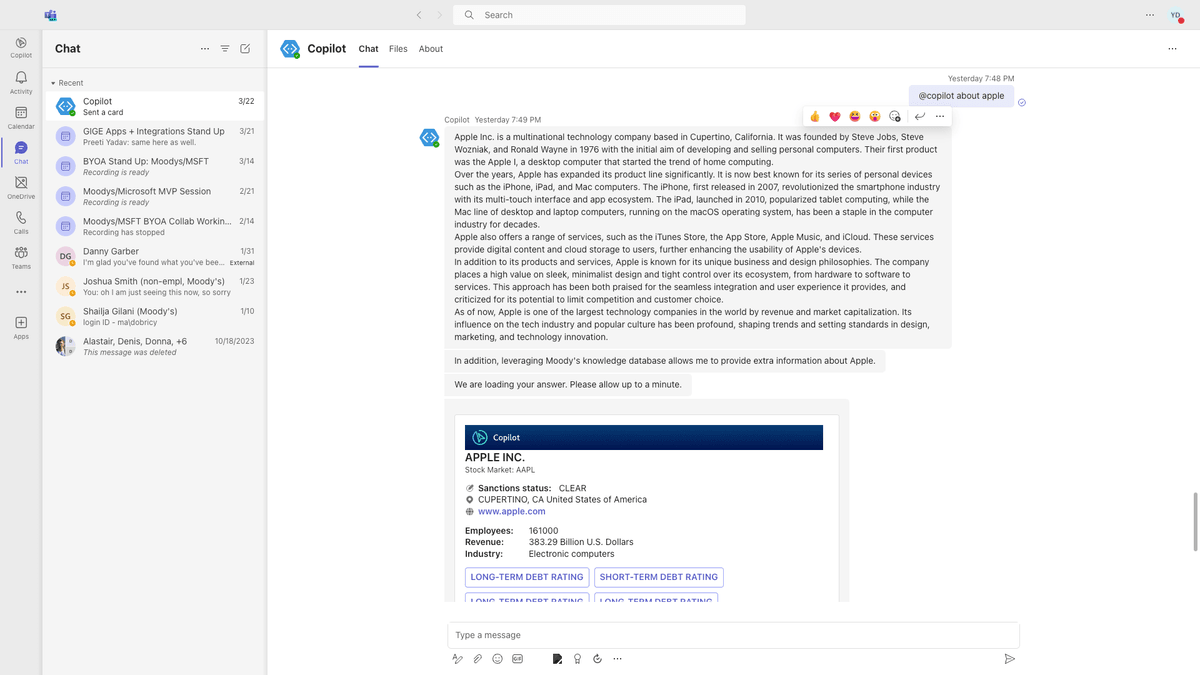
Final sample of an Adaptive Card in Production: